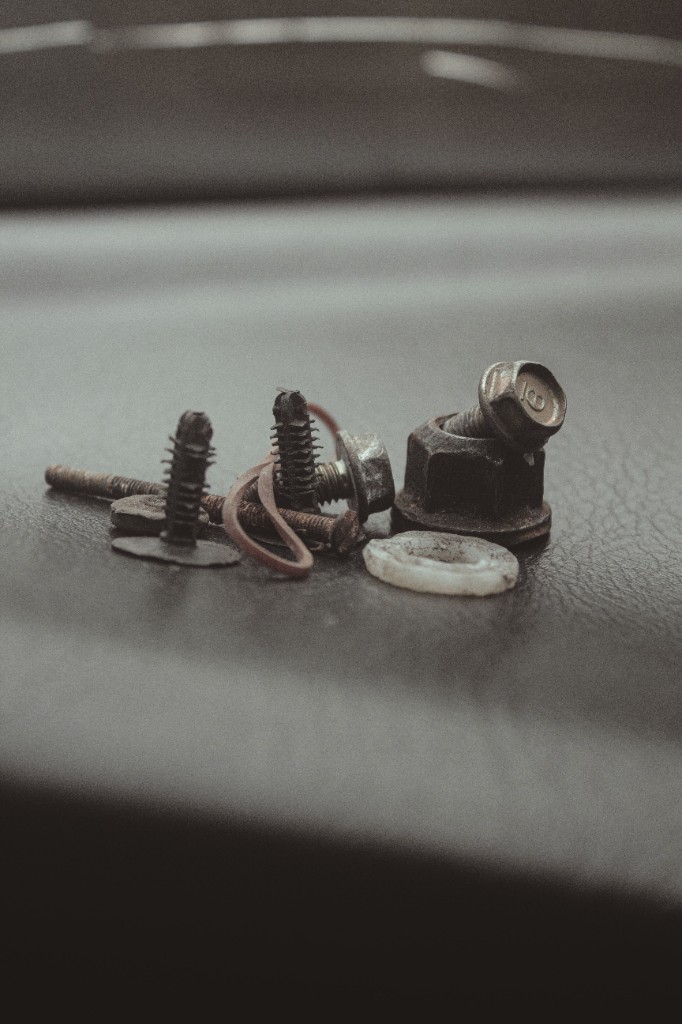
For spaceflight applications there are requirements for fastener retention per NASA-STD-5020. The requirement states that fasteners incorporate two independent, verifiable locking features to prevent vibration-induced loosening or complete disengagement.
What is fastener retention? This is simply what techniques are used to keep the fastener from falling out of the joint. The requirements say that 2 methods of retention are required for a removable fastener joint. Permanent fasteners are typically all kinds of rivets, hi-loks, and hi-lites. What is a non-permanent fastener? These are typically screws and bolts. So what are the acceptable methods for fastener retention? The first one is simple and is the torque applied. This is always the first method of retention. The second technique could be many things but not all qualify.
- Lock wire
- Locking nut (deformed threads)
- Locking insert or helicoil (deformed threads)
- Patch lock fasteners or Nyloc nuts (nylon pellet)
- Thread locker such as Loctite
So which should you choose? You want to pick the lightest, cost effective, and simplest. Start with the locking nut or locking insert. These have the highest reliability and can be easily replaced. If a nut or locking insert is cycled too many times (~3-10), the insert can become worn out and no longer function. The threads scrape against each other, causing plastic deformation and wearing away the grip each time. This is verified using a prevailing torque (sometimes called running torque). If the deformed threads are working, the required torque will increase when the fastener reaches the feature.
Lockwire is effective but it does NOT prevent loosening of the bolt (loss of preload). It should be used a last resort to prevent the joint from completely falling apart.
Patch lock fasteners and nuts with a nylon insert work well for a few cycles but should be used with caution if there is potential for a hot environment since the nylon could melt thus leaving rendering the retention feature useless. This is verified with the same method as the deformed threads (measuring prevailing torque).
Thread locker typically doesn't count as a verifiable form of fastener retention.
How can you reduce the fasteners? You can use a different fastening method such as welding or bonding. Another consideration is to attempt to combine the parts in the design.